


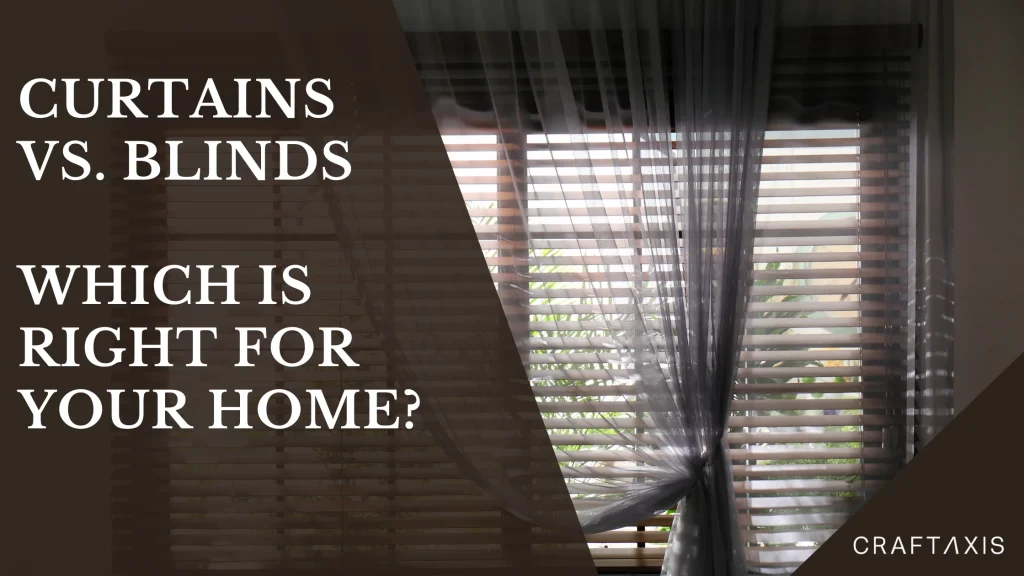
Determining if blinds or curtains are better for your home involves careful consideration of what you’re trying to achieve, your budget, the space available and what the area is used for.
Playing both aesthetic and functional roles, curtains and blinds can have a huge impact on the look and feel of a space. From blocking out light completely in bedrooms and softening the appearance of a living area, to improving privacy and security in spaces visible to the public and even helping temperature control – there’s a lot that curtains and blinds can be used for.
Curtains vs Blinds – The Key Differences
Types of blinds and how they work:
Vertical Blinds
Vertical Blinds are made using operable slats running along a top track. The slats can be tilted to vary the amount of light allowed through. They’re ideal for large sliding glass doors and wide windows.
Roller Blinds
Roller Blinds use clean, minimal fabric panels that roll up neatly via a manual or mechanical mechanism that draws the material to the top. They are made with blackout or light-filtering sunscreen alternatives, making them suitable for various applications.
Venetian Blinds
Venetian Blinds are made with horizontal aluminium, wood, or faux-wood slats that tilt to adjust light and privacy precisely. They can also be raised completely to allow maximum light into a space.
Roman Blinds
Roman Blinds are fabric window coverings that fold into soft, horizontal pleats when raised, adding warmth and texture to a room. They can be built using fabrics with different levels of light-blocking ability; however, they are typically made from sheer fabrics.
Honeycomb Blinds
Honeycomb (Cellular) Blinds are a more contemporary design that utilises hexagonal cells that trap air to provide high energy efficiency and thermal insulation. They can be made with light-filtering or blackout materials.
Day and Night (Zebra) Blinds
Zebra or Combi Blinds are a less common window covering constructed with alternating sheer and opaque horizontal fabric stripes that slide past each other to allow for precise control over light and privacy.
Types of curtains and how they work:
Curtain types are classified by their function, the type of fabric and also the heading style, which is how they attach to the rod or track. They come in a diverse range of styles and applications, from privacy and noise reduction to mood setting and purely aesthetic.
Sheer Curtains are made from lightweight, translucent fabrics that softly diffuse light and provide daytime privacy. They are often used in living spaces that don’t require complete darkness, or as a secondary curtain behind a blackout.
Blackout Curtains use thick, heavy or coated fabrics designed to block 100% of external light and improve thermal insulation and privacy.
Room Darkening Curtains are much like blackout curtains, using heavy fabrics that cut out 60% to 95% of light without total darkness.
Acoustic Curtains use dense, heavy materials that help dampen outside noise or reduce echo of interior sounds.
Thermal Curtains are designed to regulate indoor room temperatures and reduce energy costs by reducing heat and cold loss. They are made with insulated layers that block heat or cold, or trap air to create a thermal barrier.
Blinds vs. Curtains: How They Compare Across What Matters
1. Light Control and Room Darkening
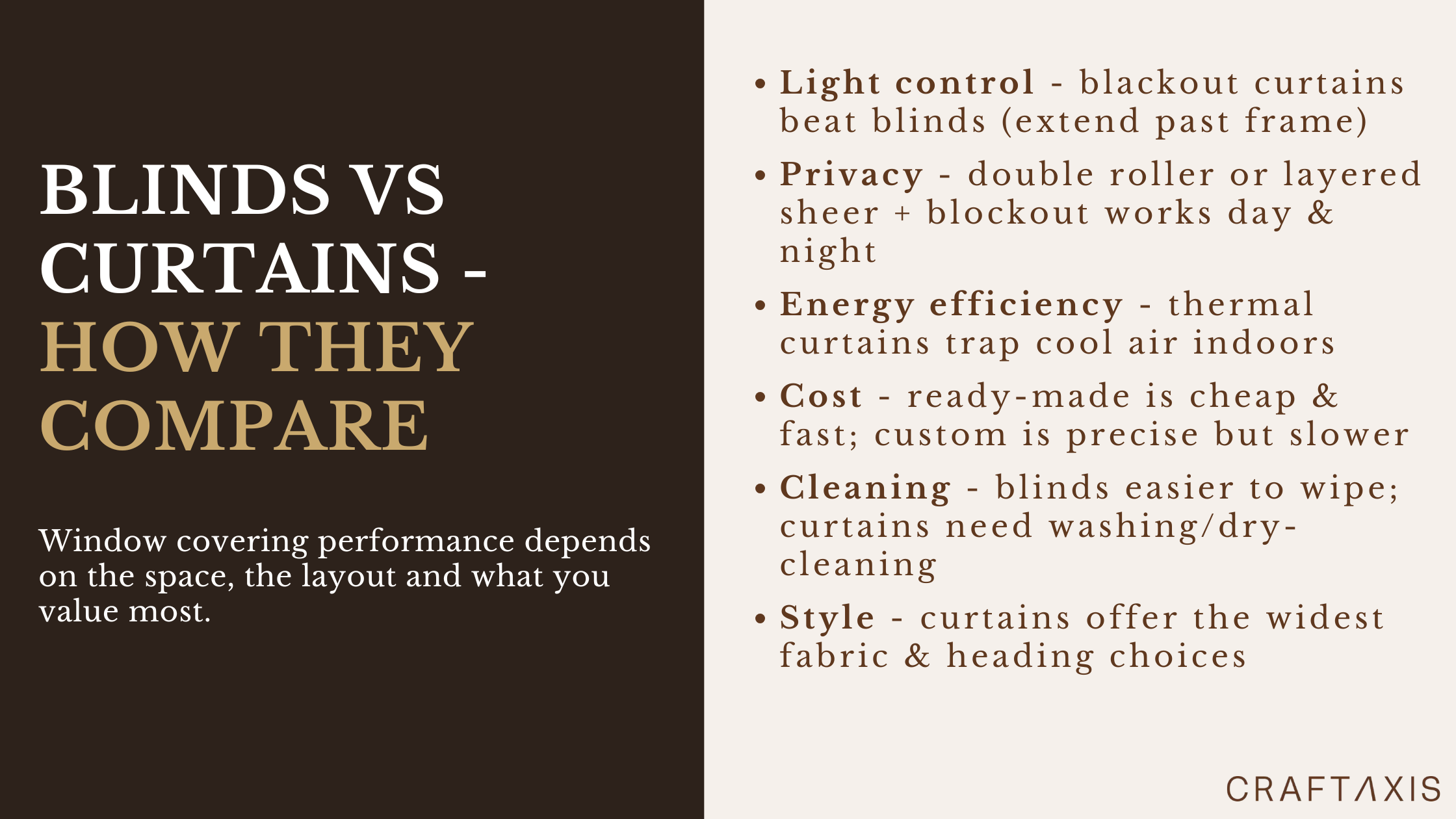
Blackout curtains generally block more light than blinds because they extend past the window frame, whereas blackout roller or honeycomb blinds fit neatly inside the frame when retracted, but typically let light in on the sides.
2. Privacy Day and Night
For day and night privacy, double roller blinds that have a sheer layer and also a blackout one work well, similar to a layered curtain setup. During the day, the sheer layer lets natural light in while blocking people from seeing in from the outside, and then the blackout layer provides complete privacy when interior lights are on at night.
3. Energy Efficiency and Insulation
The best option for energy efficiency is determined by your interior layout and the type of installation you use. Floor-to-ceiling thermal curtains with pelmets are ideal for blocking the sun in summertime. A combination of a heavy thermal curtain on top of a sheer one means you have a good balance of thermal protection and can control the amount of sunshine you want to enter the space, hence saving on energy costs for cooling and also using lights.
4. Cost: Ready-Made vs. Custom
Ready-made blinds and curtains are the most cost-effective and quick option for standard windows. They come in various sizes but are often not as high quality as custom products. By using customised blinds and curtains, you choose the materials and colours you prefer and have them made to precise measurements to suit your space. However, it can take several weeks for custom products to be made, plus installation may cost more due to their non-standard nature.
5. Cleaning, Maintenance and Durability
Blinds are typically easier to clean as they are generally more durable and can remain in-situ to be dusted, wiped and spot cleaned. Curtains don’t usually show dust, hence don’t need as frequent cleaning, plus they can also be spot cleaned to remove marks; however, for a more substantial wash they have to be taken down and depending on the material type, you can put them in the washing machine or may have to steam or dry-clean them.
6. Style, Colour and Design Flexibility
Both blinds and curtains offer design flexibility, allowing you to choose a style and colour that suits your space. Generally, blinds will be prefabricated with a material or colour palette you choose from. Curtains provide the greatest range of design alternatives, as fabrics come in such a huge variety of choices and most manufacturers will offer plenty of options not only for the material, but also for the type of heading style.
Blinds vs. Curtains - Which is Right for You?
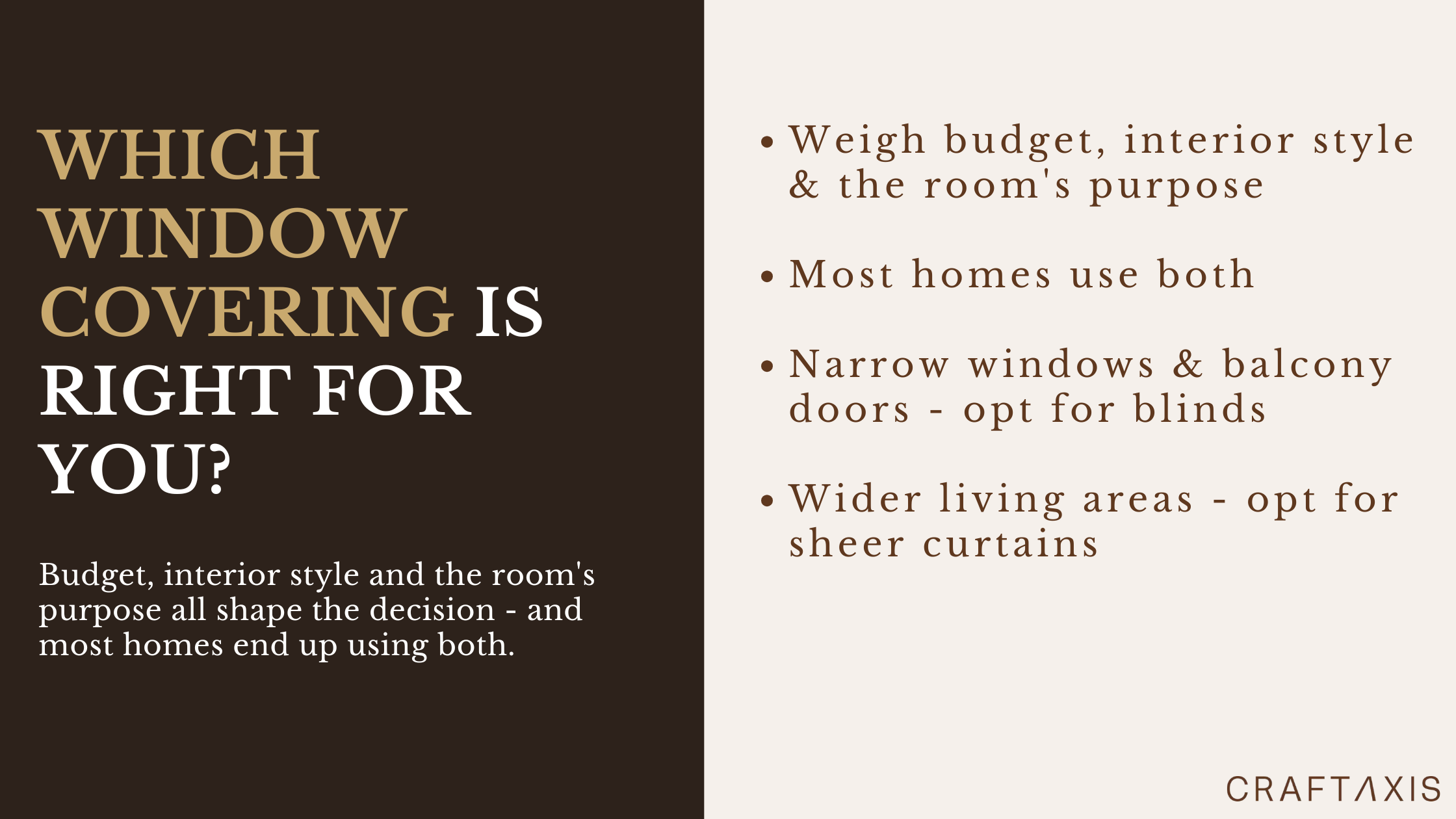
It’s important to consider your budget, interior style and ultimately the role of the blind or curtain before choosing what will be right for you.
In most homes, you will have both curtains and blinds, as they play different roles and one option will suit a space better than the other. For example, with a narrow window or balcony door, blinds may look nicer and be more practical, whereas in a living room, sheer curtains can look stylish and provide the perfect mix of privacy and light management.


