


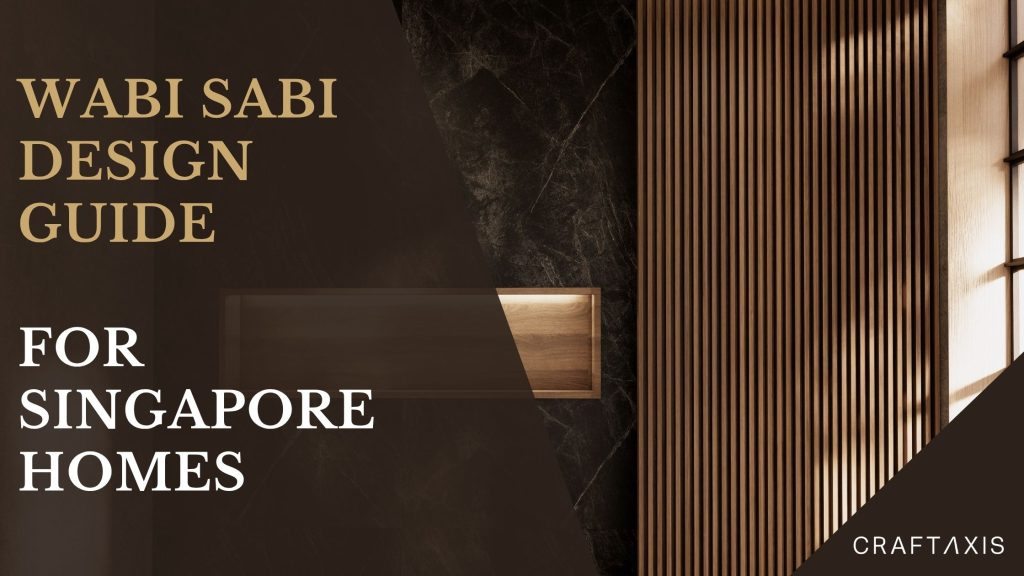
Over the past few years, wabi sabi has moved from niche Japanese philosophy to a recognisable interior style. Social media like TikTok, Instagram, and Pinterest have increased demand on the market, driving popularity into the design principle which largely centres on imperfect, earthy designs.
Whether you’re new to the concept of wabi sabi or are looking for more ways to incorporate the style into your home, here’s what you need to know about wabi sabi design.
What is wabi sabi interior design?
Wabi sabi is a Japanese approach that has come from Zen Buddhism and traditional tea ceremonies. Wabi means rustic simplicity, and sabi refers to the beauty of age and wear. Combined, the concept refers to finding beauty in things that are imperfect or incomplete.
When translated into interior design principles, wabi sabi is all about natural materials, soft earthy colours, visible texture, and furniture pieces that improve as they age.
Wabi sabi is often confused with Japandi or minimalism. While wabi sabi celebrates patina and handmade character, Japandi and minimalism focus on clean lines and neat appearances.
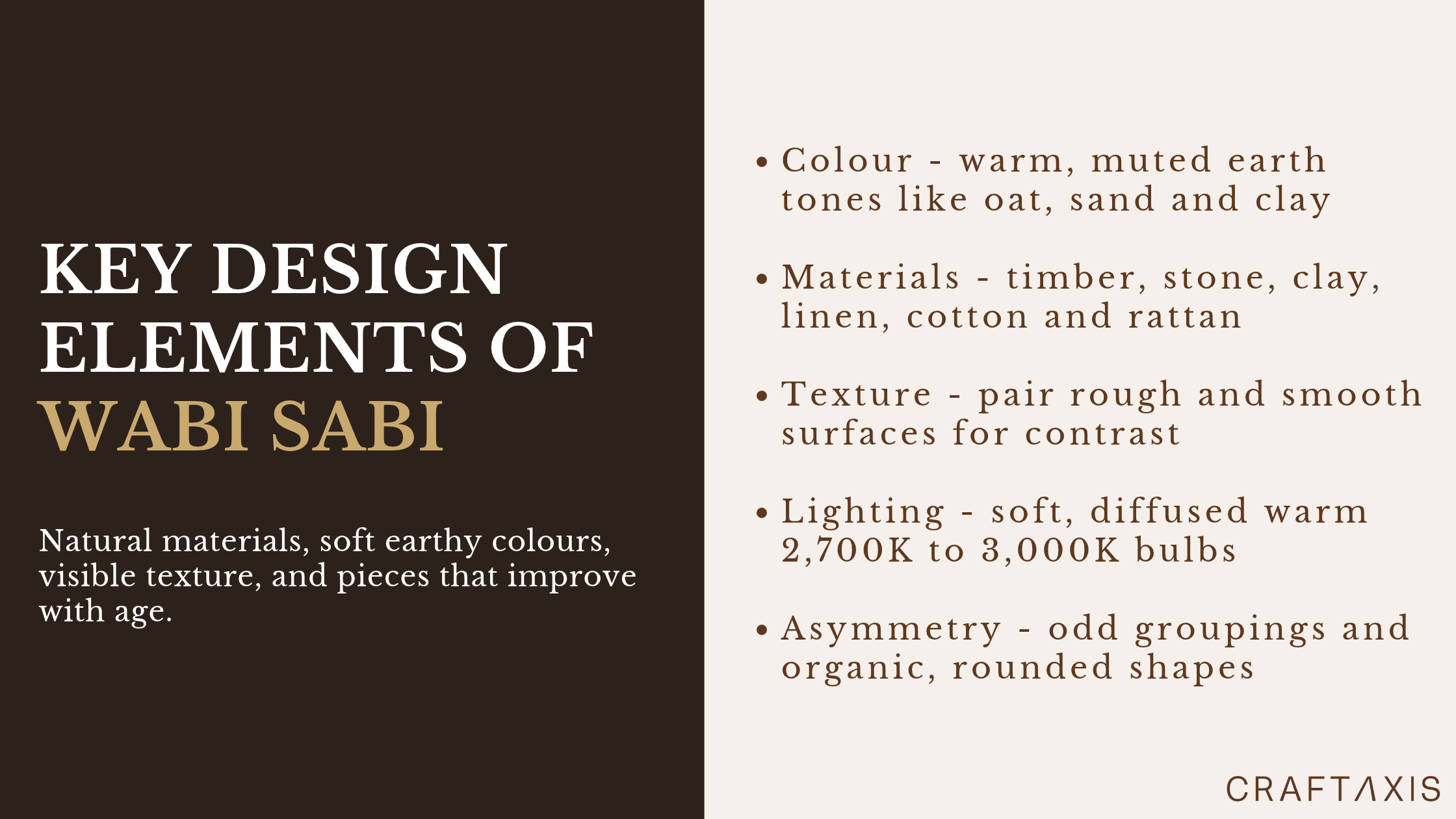
Key design elements of wabi sabi
Colour
Wabi sabi relies on warm, muted earth tones such as oat, sand, greige, clay, terracotta, olive and charcoal. These colours create a calm, natural feel to any home. Stark cool whites are avoided to prevent a clinical feeling in strong light.
Materials
Wabi sabi favours natural materials like timber, honed stone, clay, linen, cotton and rattan. These materials age naturally over time, which adds to the character and lived-in feel wabi sabi is known for. For metals, aged brass and blackened steel are preferred over chrome.
Texture
The uneven texture of materials provides most of the visual interest for the design. A common approach is to pair rough and smooth surfaces together to create a contrast.
Lighting
Wabi sabi lighting is soft and diffused, typically using warm bulbs (2,700K to 3,000K) and paper or linen shades, like those in Craft Axis’s designer lighting collection. Soft lighting and shadows add to the textural feel of the home.
Asymmetry
Wabi sabi design avoids perfect symmetry and matched sets, favouring odd groupings and organic, rounded shapes.
Applying wabi sabi to Singapore homes
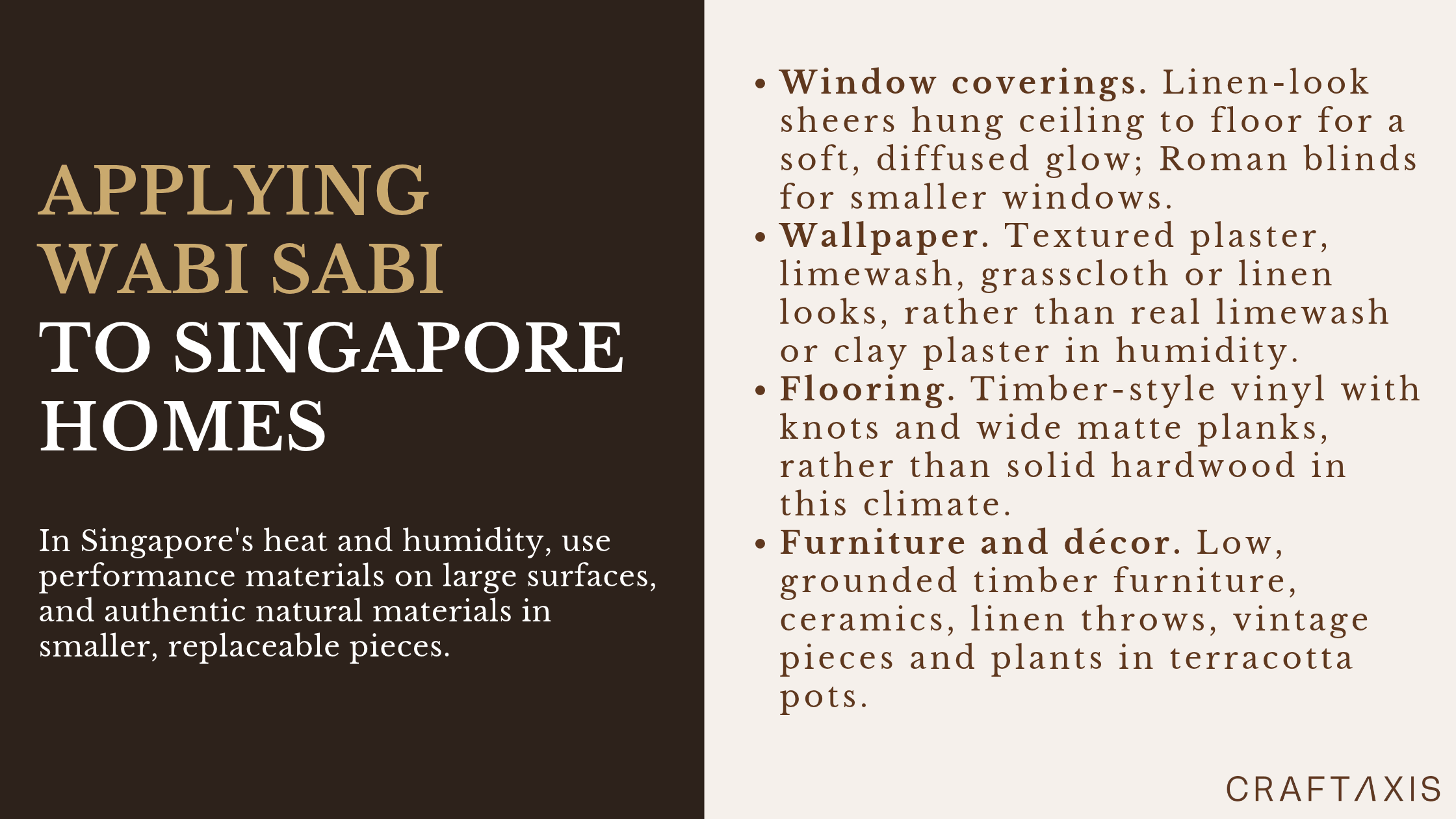
Singapore’s heat, humidity and strong sun mean natural materials can mould, warp or fade. The practical rule is to get the wabi sabi look from performance materials on large surfaces (floors, walls, windows) and use authentic natural materials in smaller, replaceable pieces like cushions, ceramics and baskets.
Wabi sabi suits HDB flats well, as a tonal palette makes compact rooms feel larger. For landed homes and shophouses, wabi sabi is easy to pull off by restoring the original terrazzo and timber and using it as a base.
Window coverings
The choice of window coverings matters for determining how natural light enters a space.
Sheer day curtains are ideal for achieving a soft, diffused glow, and linen-look fabrics are the signature wabi sabi treatment. Hang sheer curtains from ceiling to floor to make rooms feel taller.
Roman blinds with relaxed folds in natural fabric suit kitchens, studies and smaller windows.
Wallpaper
Real limewash and clay plaster walls are costly and impractical to maintain in humid conditions, but wallpaper is suitable in Singapore when you use humidity-resistant finishes. An easy alternative is to opt for textured wallpaper to achieve the same tactile appearance. The best wabi sabi wallpaper styles are plaster and limewash effects, grasscloth and natural weave looks, linen textures, and soft Japanese-inspired motifs or earthy murals.
Flooring
Solid hardwood floors are difficult to maintain in Singapore’s climate. Vinyl flooring styled with a natural timber or stone look is a better choice, and is also much easier to lay over existing tiles. Opt for timber-style vinyl flooring with knots and grain variation, matte or embossed surfaces and wide planks to create more texture throughout the space.
Furniture and décor
Choose low, grounded furniture in solid timber and natural upholstery with removable covers. Add handmade ceramics, linen throws, vintage pieces and plants like fiddle leaf figs, snake plants or bonsai in terracotta pots.


