The pattern was always there. Pressed into the wallcovering, a field of small, raised loops woven into the surface, a texture the hand knows before the eye does.
Josef Albers understood this.
In his preliminary course at the Bauhaus, he asked students to handle materials before designing with them: to feel how paper holds a crease, to see how a fold changes an edge — and to recognise how a fragile sheet can gain strength when cut, bent, or stressed.
The lamp on the worktable was a version of that lesson.
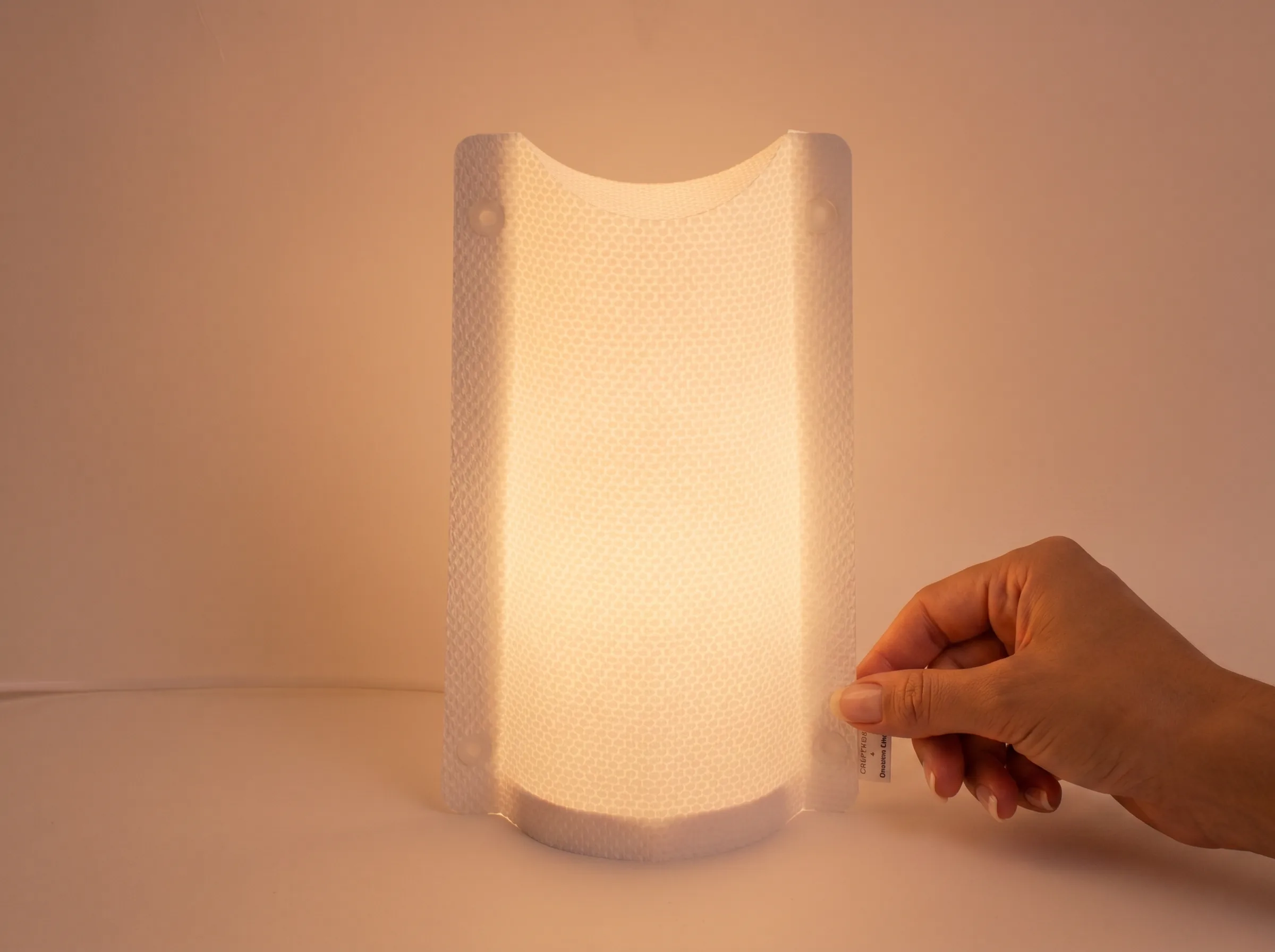
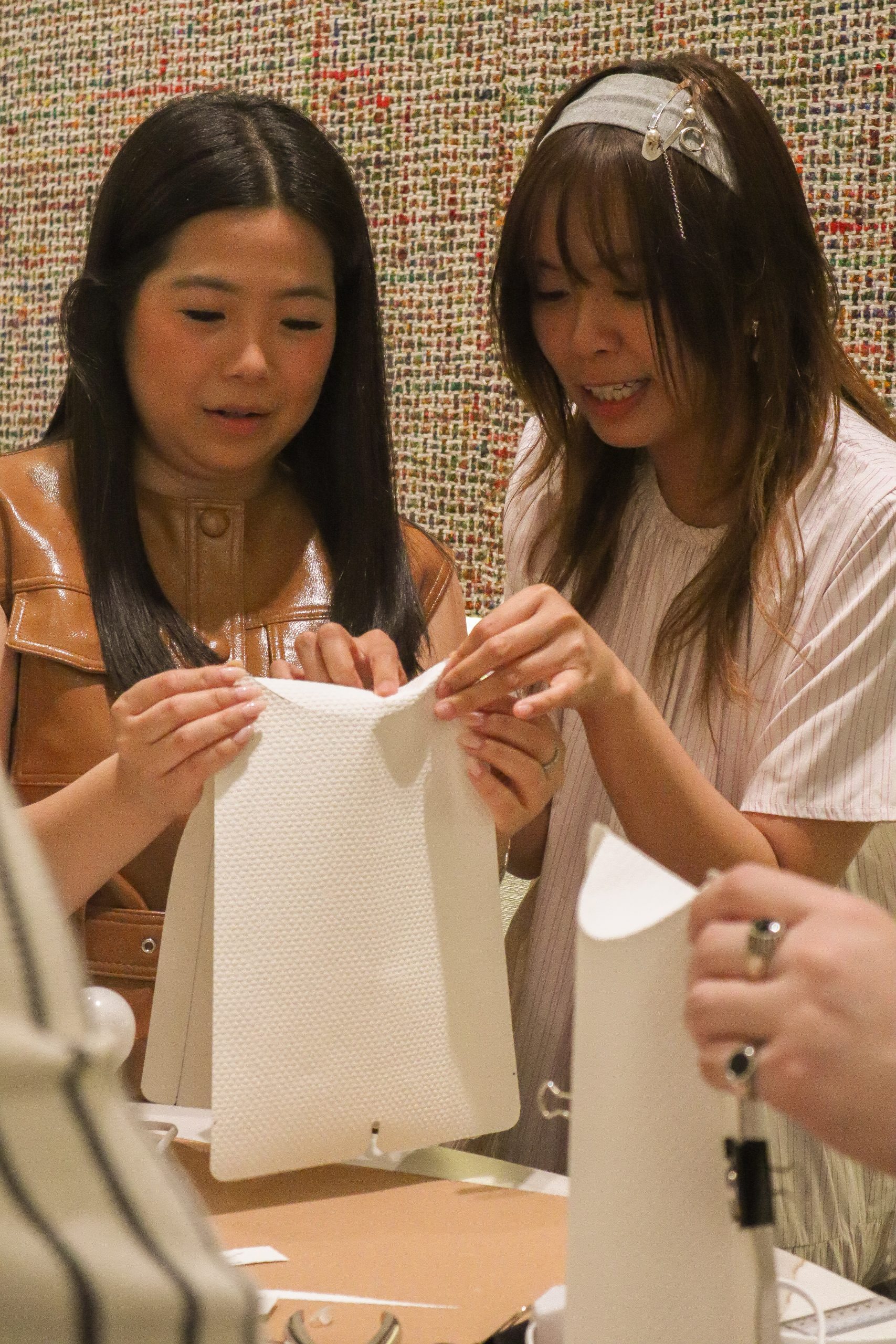
A single sheet of archived wallcovering, curved and fastened with pale rivets, bowed gently into the form of a lantern. Switched on, the weave revealed itself: a warm amber field threaded with darker marks, each loop holding back just enough light to leave evidence.
The wallpaper had not changed. Its role had.
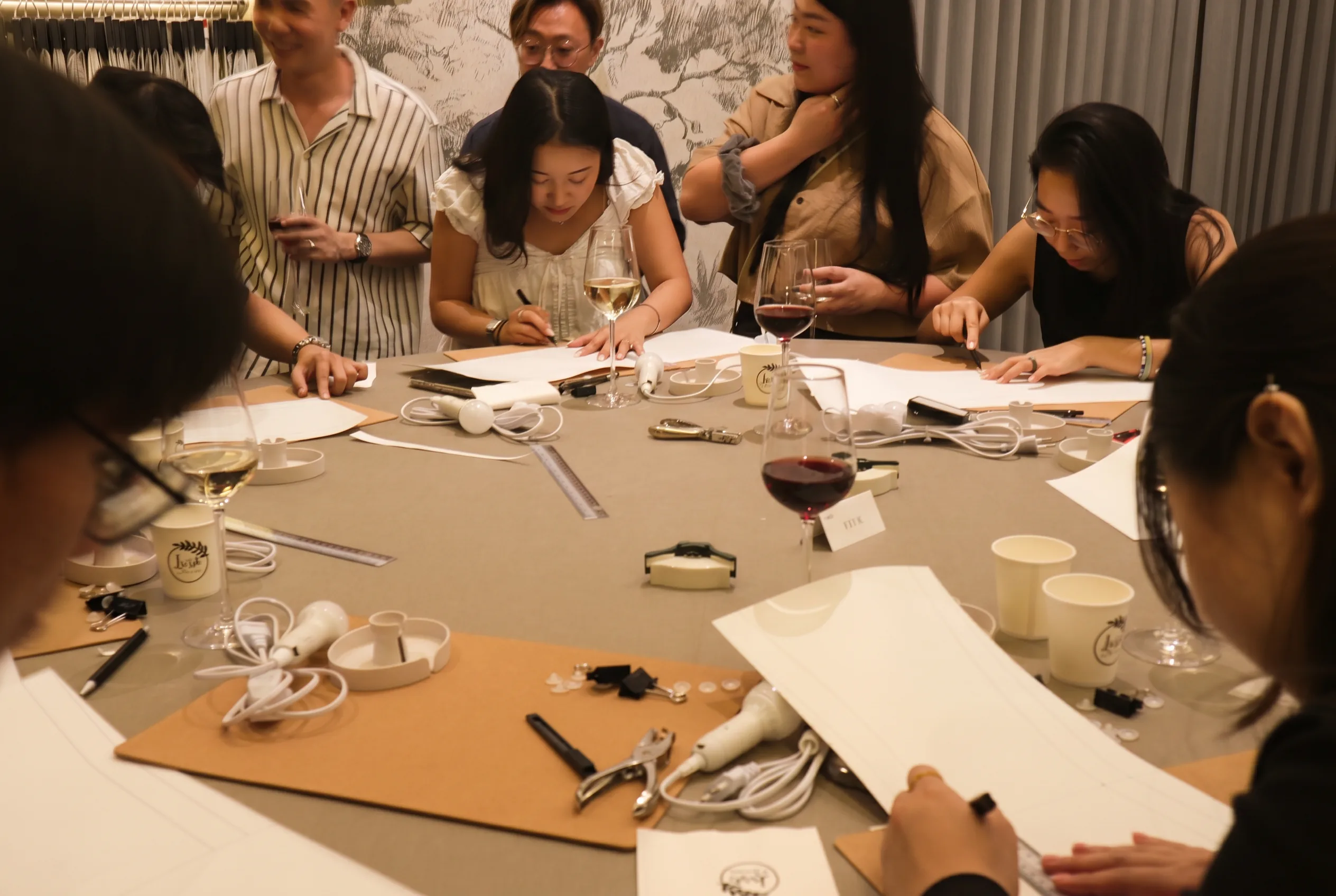
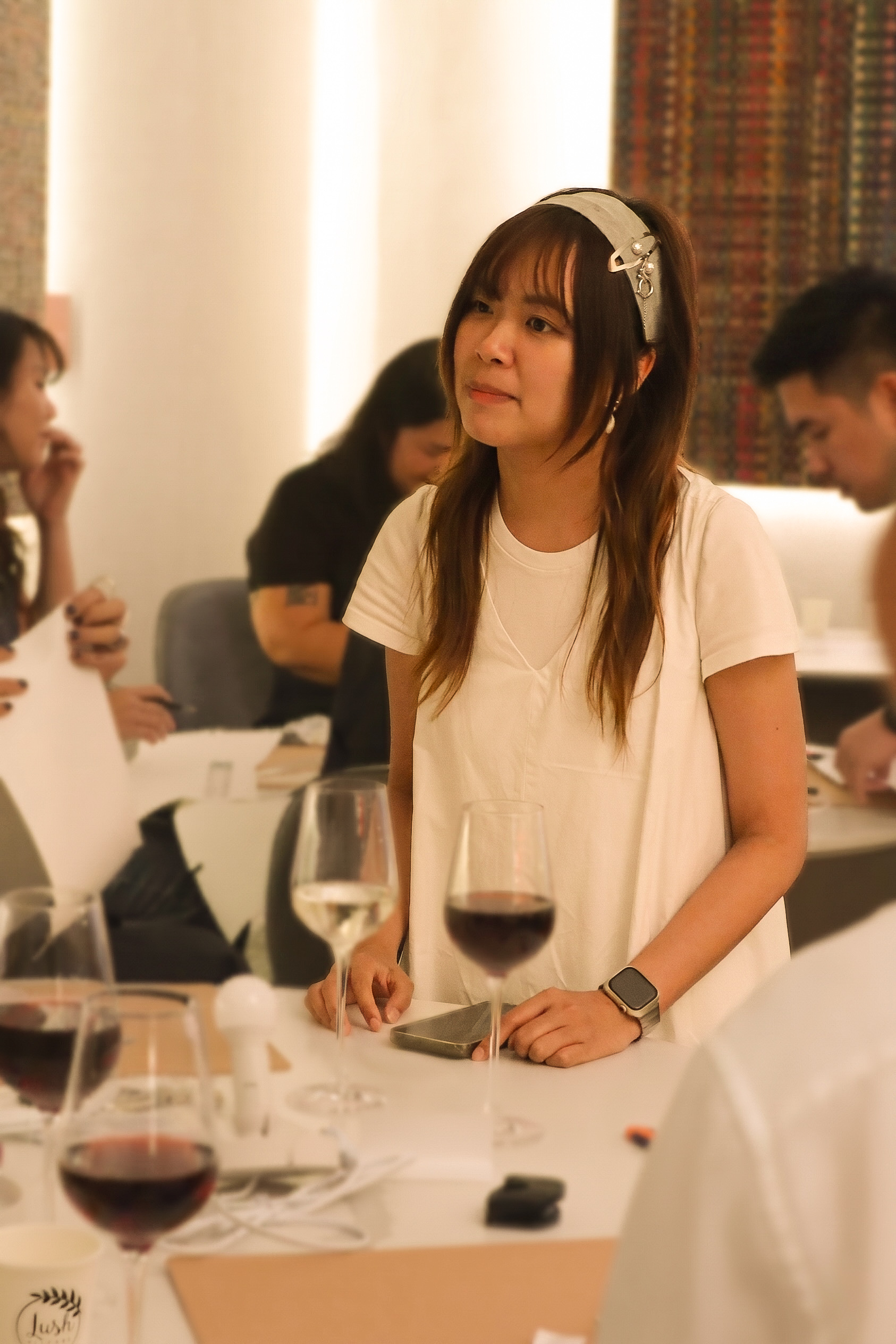
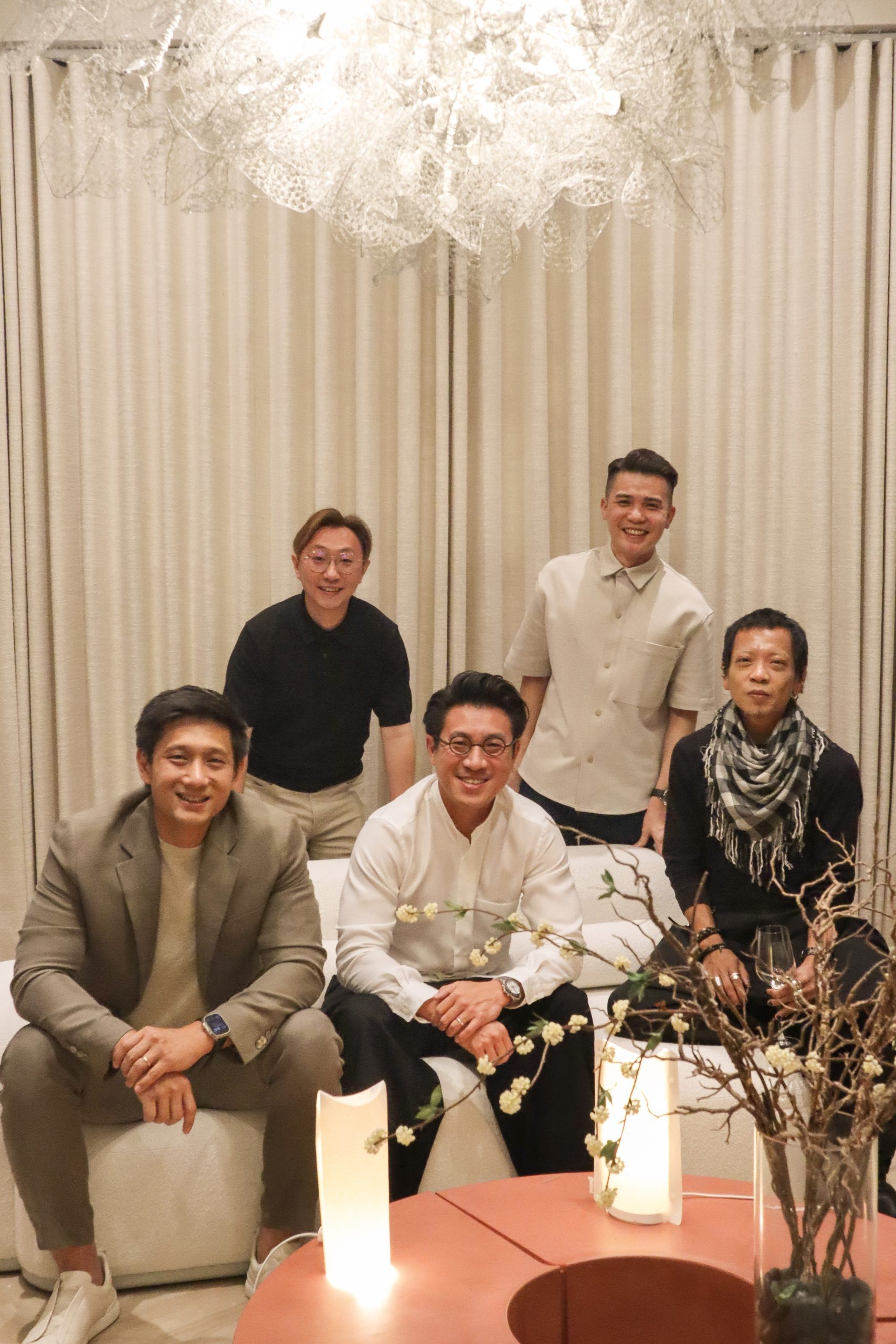
Part of our broader Form & Surface: Equilibrium exhibition, an ongoing material study housed at our showroom, the Archive to Illumination workshop began with a simple question: what happens when a surface is no longer treated as a finish, but as a material capable of holding form, revealing structure, and assuming a different role?
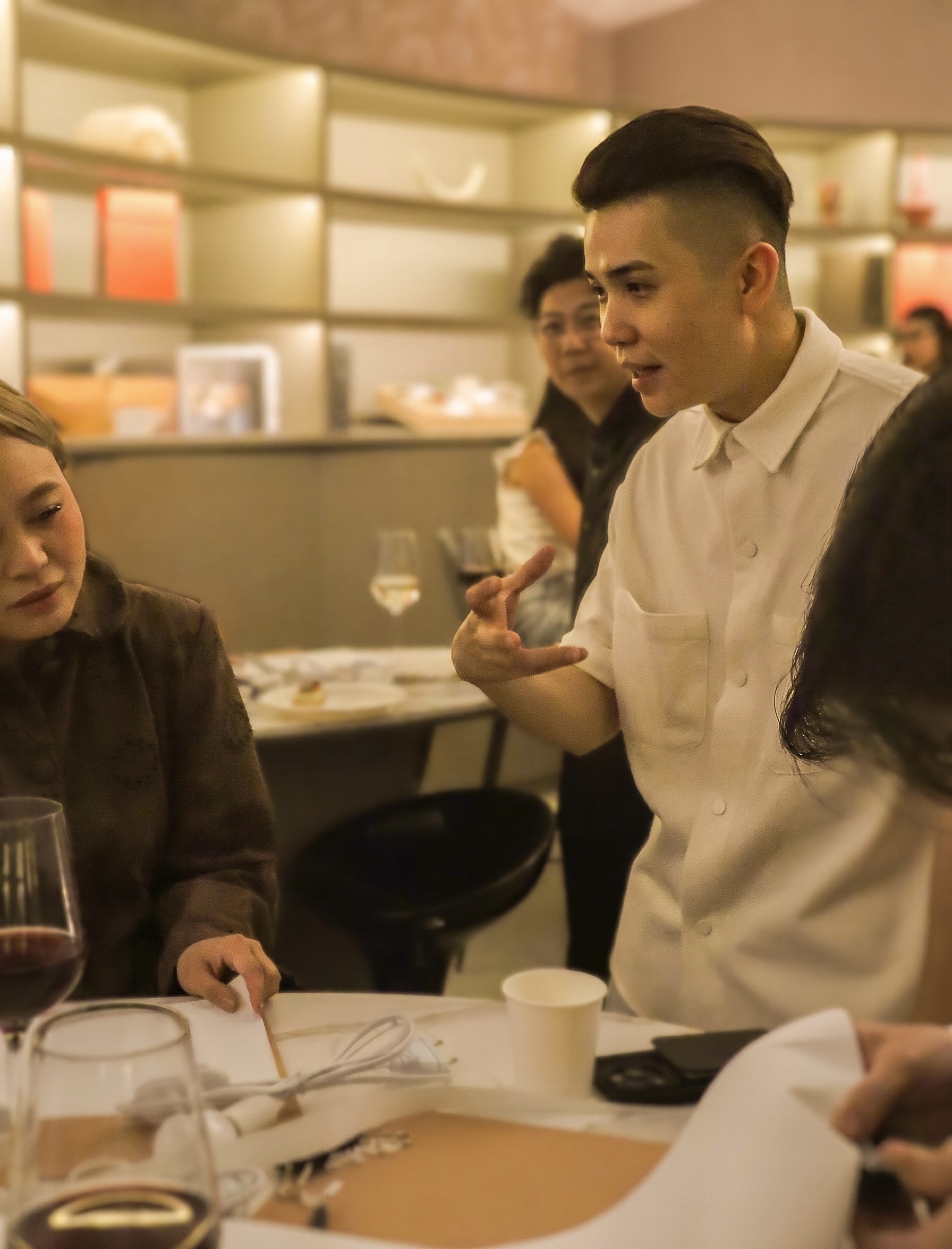
Emeline Ong was the right person to guide that inquiry. The Singapore-based industrial designer works with paper at its most elemental. Her Pastille Collection, shortlisted for the 2024 Dezeen Awards, transforms recycled paper pulp into solid pastel-hued tables through a patient process of compression, layering, and form-making.
For us, the same material opens up a different set of possibilities. Emeline’s work gives pulp weight and volume; our interest is in what wallcovering can do through texture and light that influence the particular atmosphere a surface creates. But in that same room, both practices arrive at the same question: how far can paper go before it becomes something else?
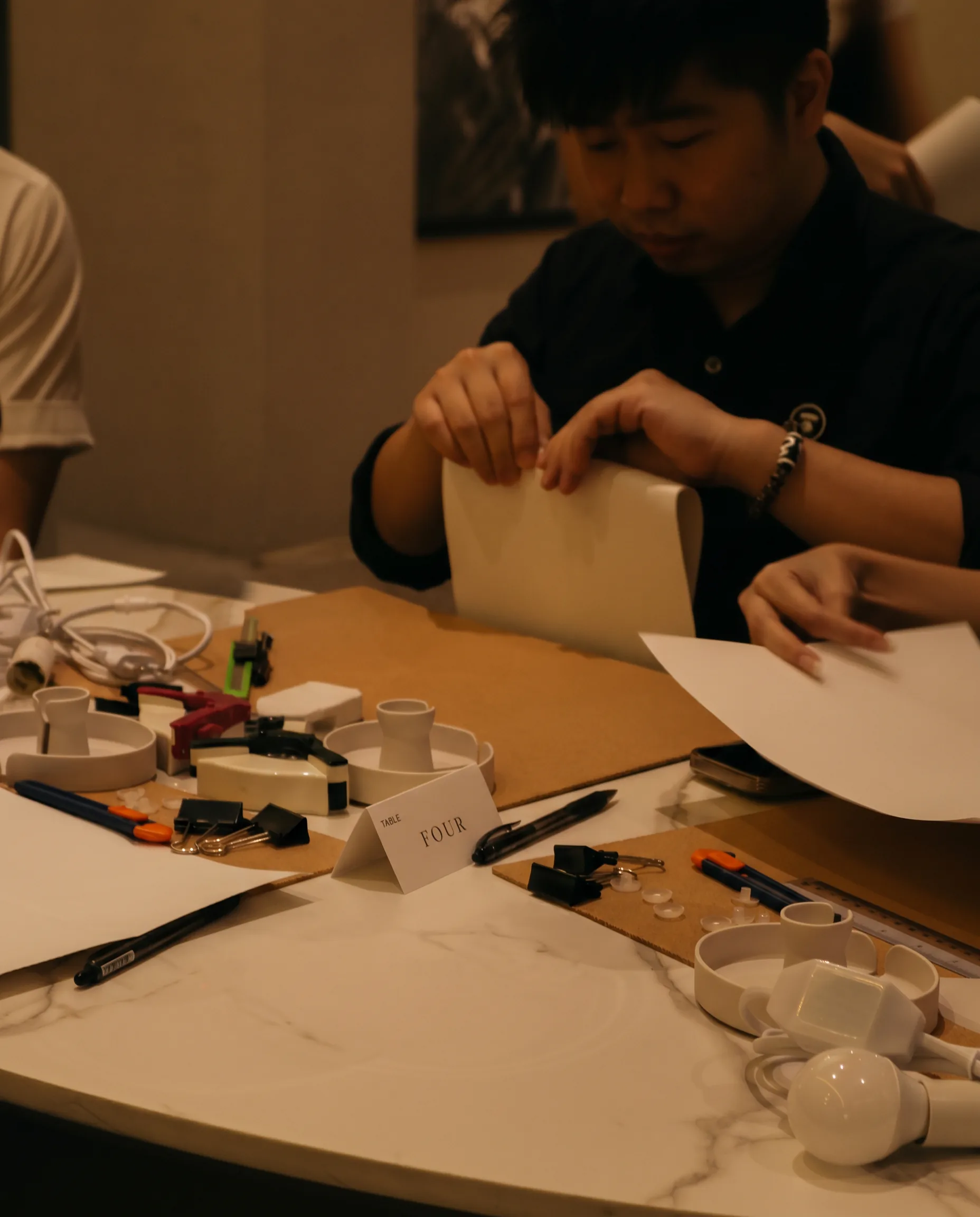
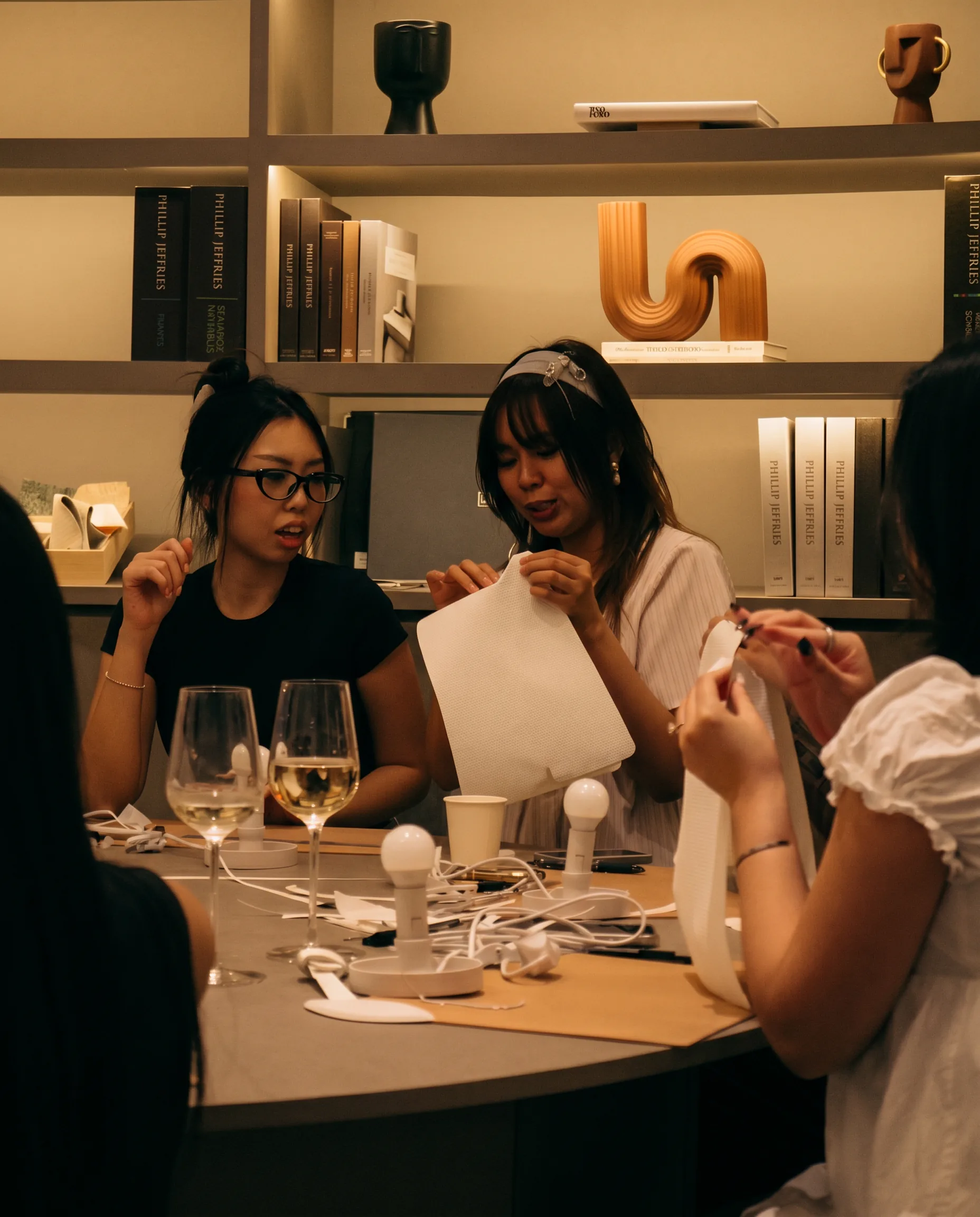
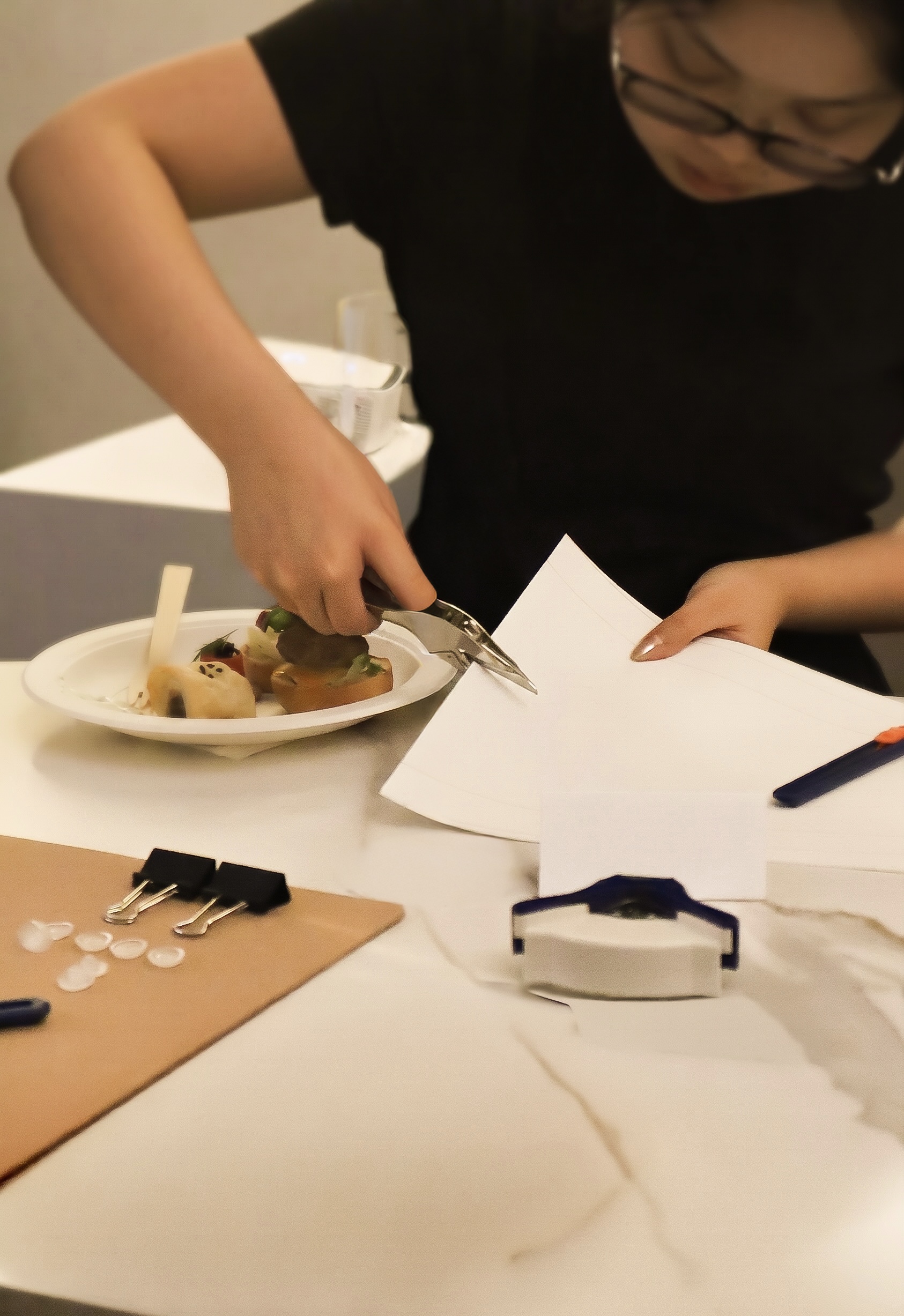
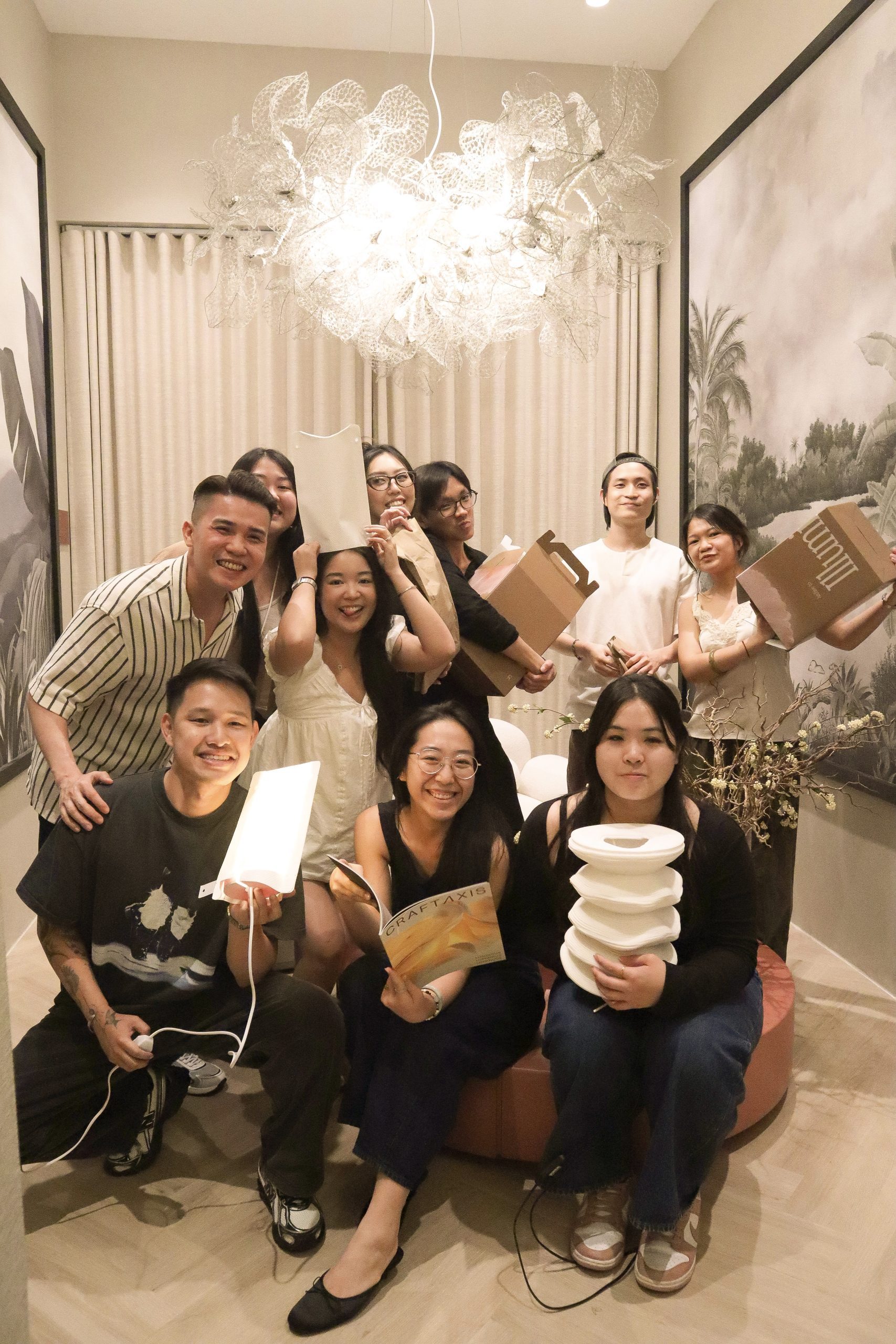
Over three evenings, we invited interior designers and architects into our studio to study archived wallpaper as material rather than product. The offcuts on the table were substantial — unprinted, textured, with a close weave of small, raised loops — the kind of surface whose material qualities usually work quietly once installed on a wall.
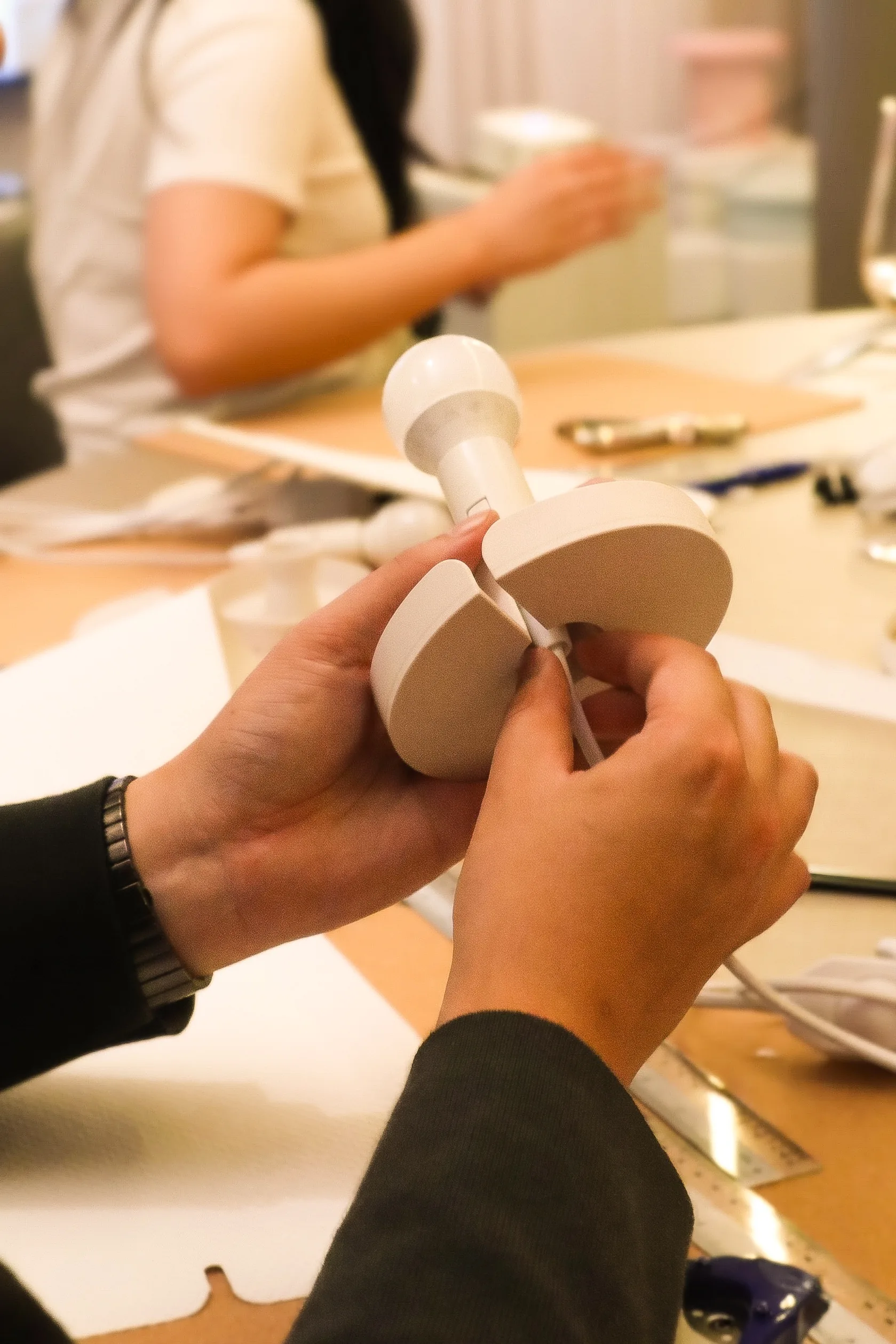
Emeline demonstrated what those qualities were: where the paper would flex and recover, where a crease would hold, what the weave permitted and what it refused. Our guests, in turn, followed the material’s logic rather than imposing their own. Even the rivets were left exposed, so each lamp remained connected to the sheet it came from.
When the light came on, the wallpaper made its own case. A material whose role was normally to serve as background had been given a different brief. It stepped forward. It held form. It filtered light through its own structure, turning the woven surface into an amber field of warmth threaded with the material’s grain. Turned from a covering into a vessel, the wallpaper was at once the same, yet unmistakably different from what it was before.
For designers and architects accustomed to seeing wallcovering specified near the end of a project, the lamp offers a subtle shift in perspective. If a wallcovering can shape light, hold form, and create atmosphere, shouldn’t it belong earlier in the design conversation — not as a finishing layer, but as part of how the room is imagined from the start?
Exhibition Details
Our broader exhibition, Form & Surface: Equilibrium, continues at our showroom through the end of August 2026. It brings together The Brushed Series, our in-house collection of hand-rendered acrylic wallcoverings, from the layered landscapes of Aether Ascent to the textured rhythms of Ginkgo Lyric, alongside Emeline Ong’s Pastille Collection and Mallo Seats. Together, surface and furniture find their way back to the same material, and to the question of what paper can become when guided by considered design.
Visit us and see what familiar materials can become — sometimes quite literally — in a new light.
The Wallpaper Fabric by Tecnografica is a technical wallpaper, with a structured fabric effect surface, that allows the reproduction of bright colors and very fine detailed texture design, also thanks SD technology used for the graphic realization and the high resolution of the digital printing.
TNT
The Wallpaper TNT by Tecnografica is a technical wallpaper, with a structured spatulate effect, that allows the reproduction of bright colors and very fine detailed texture design, also thanks SD technology used for the graphic realization and the high resolution of the digital printing.
ECO (PCV FREE)
ECO is a PVC-free wallpaper with no chemical solvents, provided with all certifications required for application in private and public locations. The support is white and lightly embossed. Moreover, this finish guarantees photographic-quality images, with extremely bright and vivid colours.
Metal
Metal is the vinyl wallpaper with metallic effect by Tecnografica. Thanks to the silver foil that covers the whole surface, when the light hits the wallpaper it returns incredible iridescent reflections. Metal wallpaper enhances metal colors such as gold, silver and copper, and gives particular brilliance to vibrant, saturated colors.
Moreover, the special embossing with fabric effect makes this finish very elegant and suitable for every environment, both residential and commercial.
h2o
Tecnografica’s H2O Wallpaper is a special wallpaper made of fiberglass enabling the decoration of the most humid environments including the bathroom and the internal part of the showers. The exclusive SD technology used for the graphic realization and the high resolution of the digital printing perform a wide chromatic range of color with stunning decorative effects.